
Before I ever reviewed a service escalation, built an operations framework, or sat in a boardroom discussing uptime and SLAs, I learned a simpler and more durable lesson: show up, do the work in front of you, take care of the people beside you, and trust that they will do the same.
I learned that lesson in the Air Force and Air Force Reserve, where I spent more than six years as an Inflight Refueling Specialist on KC-135s and KC-10s. To someone outside that world, the title can sound abstract. It was not. It meant two aircraft moving at several hundred miles an hour, connected by a boom that had to be flown with precision measured in inches. Every detail mattered. Every moving part had to be orchestrated with speed and precision, with a clear understanding of the downstream impacts based on our role and mission responsibilities. There was no margin for a bad day, because the mission depended on fuel arriving on time, every time, regardless of weather, fatigue, or how long the crew had already been working.
I did not realize it fully then, but I was learning what service actually means. Not the polished version that fits neatly on a slide. The real version. Someone, somewhere, is depending on you to execute, and the people around you are depending on you to do your part so they can do theirs.
Over time, I came to understand the military as a chain of connected responsibilities. You serve the country, but that service shows up through the mission in front of you and the people depending on your work. Crew Chiefs maintain the tanker. The tanker supports the bomber. The bomber supports the mission. Each role has to be orchestrated in the right order, with the precision required for the next one to succeed. That structure is not bureaucracy. It is discipline, and it is how outcomes get protected.
That became clear to me during a training mission. Before flights, aircrews stopped at the Flight Kitchen for box lunches, coffee, and water. One day, I was first in line when a bomber crew came in behind me and moved straight to the front. At first, I saw it as unfair. We were all training. We were all waiting. But the Flight Kitchen understood the mission better than I did in that moment. The bomber crew had priority because their readiness came first, and our job was to support that readiness. Hours later, we would be refueling that same crew in the air. That experience stayed with me because it made the lesson plain: service is not about rank, convenience, or who arrived first. It is about understanding whose mission depends on yours and acting accordingly. In training, you practice that discipline every time, because when the mission is real, there is no time to learn it on the fly.
That is the foundation of everything I now do at Source Support Services, and it is the foundation this country was built on two hundred and fifty years ago.
On July 4, 2026, the United States turned 250 years old. That is not a small anniversary, and it deserves more than a long weekend and a fireworks display. It is a moment to look at what has carried this country through two and a half centuries of changes, from the fight for independence to ongoing peacekeeping missions, and the answer keeps coming back to the same thing. People who showed up and did the work, generation after generation, often without recognition and rarely for the credit.
Field service is built on that same principle, whether the person doing the work spent their career in uniform or not. Someone has to be the one who shows up when a system goes down at two in the morning. Someone has to be trusted to walk into a customer’s most critical environment and make it right. Our country’s milestone and the work we do at Source Support are connected by the same thread: commitment to service that does not waver when no one is watching.
Part of my role at Source Support is optimizing how we operate. That sounds like a back-office function until you understand what it actually means day to day. It means making sure a field engineer in one country and a compliance team member in another are working from the same playbook. It means building processes that hold up under pressure instead of falling apart the first time something unexpected happens. It means designing systems where the right person, with the right credentials and the right training, shows up on time at the right site, every time.
That discipline did not come from a business school case study. It came from refueling our country’s aircraft. The military does not tolerate loose processes when lives are on the line, and that standard stuck with me. When I look at our Unified Services Platform today, I see the same logic applied to a different mission: orchestrating people, parts, training, and compliance across the most complex infrastructure environments in the world, with the same precision that mission-critical work has always demanded.
I learned that precision before we ever left the ground. Before each sortie, we briefed the details that could not be left to chance: timing, altitude, fuel targets, communications, contingencies, and abort criteria. Once we were airborne, the goal was not to figure it out in the moment. It was to execute what we had already decided and adjust only when the mission required it. Afterward, we debriefed honestly: what worked, what changed, and what it cost us. That rhythm stayed with me. At Source Support, I still think about service delivery the same way.

Plan and design the promise carefully, deliver it consistently, understand the downstream impacts, and improve every dispatch so services remains reliable, scalable, compliant, and protective of our customer’s brand.
Our CEO, Jim Kirby, recently wrote about the skilled labor shortage facing data center buildouts and field services and the need for strong orchestration across a variable workforce. His point deserves repeating: veterans bring technical training, discipline, and the ability to perform under pressure. Many have already maintained complex systems in demanding environments that rely on strong orchestration and communication. The transition into field service is natural, but only if employers can quickly credential, train, and deploy that talent.
That matters because many veterans struggle to find full-time work after service, and some who do are underemployed. This is not a talent problem. It is a translation problem. Someone who maintained radar systems, generators, or aircraft has already done the hardest part. What is often missing is a clear bridge from military experience to civilian credentials and assignments. The demand on the other side of that bridge is growing fast. The Uptime Institute has reported that more than half of data center operators struggle to find qualified workers, and broader trade estimates point to shortages in the hundreds of thousands. The need is not coming. It is already here.
Here is what makes this moment particularly frustrating. At the same time the industry is short on qualified field talent, some OEM’s are laying off experienced technicians to reduce short-term operating costs. I understand the pressure behind those decisions. Budgets are real, and margins are tight. But when a technician with fifteen or twenty years of product knowledge walks out the door, that knowledge does not walk back in. Organizations racing to build the next generation of AI and data center infrastructure cannot afford to win a short-term cost battle and lose the long-term capability war.
This is precisely where Source Support has built its model differently. Through our Unified Services Platform, we do not simply staff open positions. We source, credential, and train a flexible, global network of field engineers and trades people, so our OEM customers can scale their workforce up or down without losing the institutional knowledge that takes years to build. When an experienced technician’s career is evolving, whether that means a layoff, a retirement transition, or a desire for more flexible work, our platform is built to bring that expertise back into the field rather than letting it disappear.
One practical way to close the gap between military service and civilian field work is the Department of Defense SkillBridge program. It gives eligible service members real civilian work experience with approved industry partners during their final months of service, while they continue receiving military pay and benefits.
SkillBridge works because it turns military experience into a clear civilian path. Service members who have worked in maintenance, logistics, or technical operations often need targeted credentials, role mapping, and a defined first ninety days, not a complete restart.

That is the kind of onboarding infrastructure our industry should be building, and the kind Source Support intends to support as we grow our field engineer network.
Veterans transitioning into civilian work are not a charity case or a public relations talking point. They are a serious answer to a serious labor shortage, provided the industry builds the right structure to receive them. That structure includes credentialing pathways that respect military experience instead of discounting it, training programs that close specific skill gaps quickly, and a flexible deployment model that lets people work in a way that fits their life after service.
As America marks two hundred and fifty years, I keep coming back to the same idea I learned on a tanker crew decades ago. Service is not a phase of life that ends when you take off the uniform. It is a mindset that follows you into whatever you do next, whether that is refueling aircraft, running operations for a global field service company, or walking into a data center at three in the morning because a customer needs the system back online.
Source Support was built on the belief that the people doing this work deserve an organization that takes their development as seriously as they take their craft. Veterans bring a level of discipline and readiness that this industry needs right now. Our job is to make sure they have a clear, well-built path to put it to work.
If you lead a veteran owned staffing firm, training organization, or trade focused business and you see the same opportunity I do, I want to talk with you. Source Support is expanding our channel partner network through the Unified Services Platform, and veteran owned organizations bring exactly the kind of credibility, discipline, and talent pipeline this industry needs. Whether you place skilled trades, deliver training and certification programs, or staff field engineers, there is a place for your organization inside our ecosystem.
If you are a veteran preparing to transition out of service, or a skilled technician whose career is evolving and you are ready for your next assignment, I want to hear from you. Source Support Services is building a global network of credentialed field engineers and trades professionals, with training through Source Academy and a flexible model designed around how you want to work. Your experience, discipline, and ability to perform under pressure are exactly what this industry is looking for.
Founder of Veterans in Field Service
The conversation doesn’t end here. Watch for an upcoming episode of TechWorks Talks featuring the founder of Veterans in Field Service, where we’ll explore how military experience translates to success in field service, the opportunities created by programs like SkillBridge, and what the industry must do to build the next generation of technical talent.
COO, Source Support Services
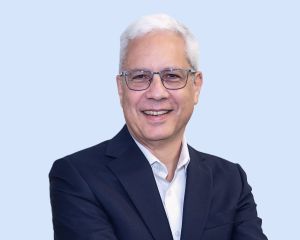
Eric Lomascolo is Chief Operating Officer of Source Support Services, a global technology services company headquartered in Lawrenceville, Georgia, serving customers in more than 120 countries. A veteran of the United States Air Force and Air Force Reserve, Eric brings extensive experience across operations, product management, and solutions marketing to Source Support, where he leads efforts to optimize the company’s global service delivery operations.
sourcesupport.com | Connect with Eric Lomascolo on LinkedIn
